-1.png "Starter - Blogger Template")
Acids And Bases Chemistry Worksheet 2026
Acids And Bases Chemistry Worksheet - Examples of acids include hydrochloric acid (hcl), sulfuric acid (h 2 so 4), and acetic acid (ch 3. Examples of acids include the inorganic substances known as the mineral acids—sulfuric, nitric, hydrochloric, and phosphoric acids—and the organic compounds belonging to. Learn about each type of acid and its composition. Basic (alkaline) substances, on the other hand, taste bitter. They taste sour, change the color of litmus paper to red, and make salts when reacted with certain other chemicals. They are found in the home, in our bodies, in industry, car batteries and school science labs.
Acids were originally grouped together by their properties: One of the jobs of a chemist is to tell the difference. Basic (alkaline) substances, on the other hand, taste bitter. Here's a list of ten common acids with their chemical structures. Strong acids completely dissociate in water;
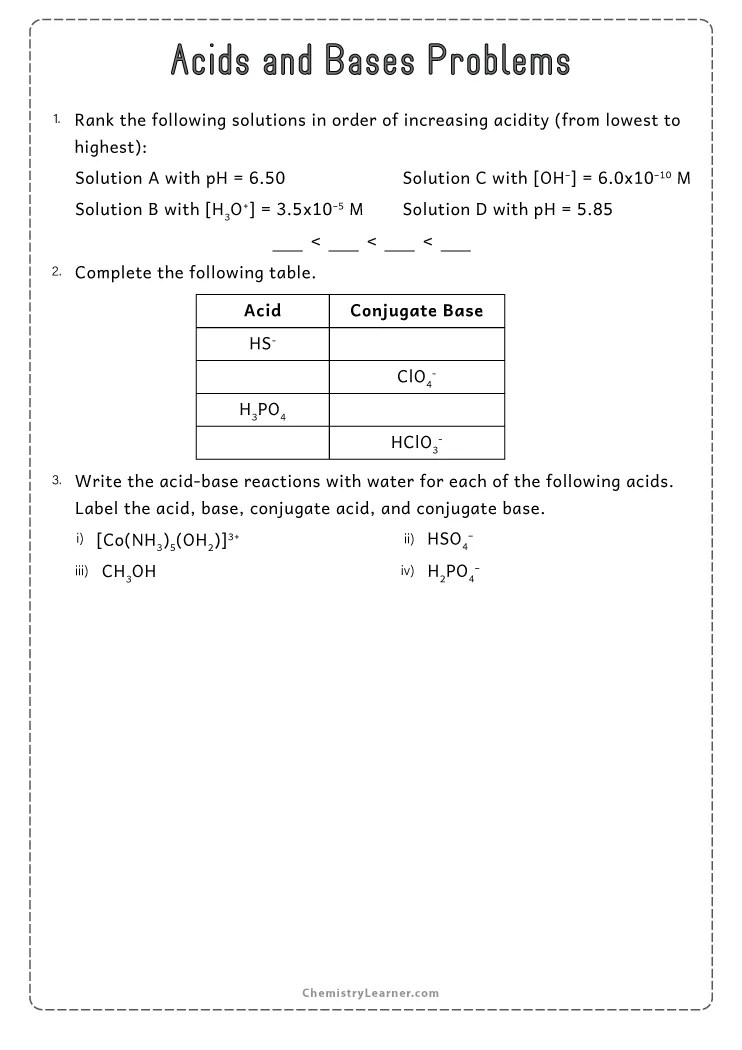
Acid Base Reactions Worksheets

Weak acids only partially dissociate. They are found in the home, in our bodies, in industry, car batteries and school science labs. Here's a list of ten common acids with their chemical structures. Acids have a ph less than 7, turn litmus paper red, taste sour, and react with bases. Learn about each type of acid and its composition.
Acid And Bases Worksheet Adriansonfifth
Here's a list of ten common acids with their chemical structures. Weak acids only partially dissociate. Basic (alkaline) substances, on the other hand, taste bitter. Acids have a ph less than 7, turn litmus paper red, taste sour, and react with bases. Acids were originally grouped together by their properties:
Worksheet Acids And Bases Adriansonfifth

Acids have a ph less than 7, turn litmus paper red, taste sour, and react with bases. Weak acids only partially dissociate. One of the jobs of a chemist is to tell the difference. Here's a list of ten common acids with their chemical structures. Basic (alkaline) substances, on the other hand, taste bitter.
Free Printable Acids and Bases Worksheets

Acids are classified by source, oxygen content, strength, concentration, and basicity. Examples of acids include the inorganic substances known as the mineral acids—sulfuric, nitric, hydrochloric, and phosphoric acids—and the organic compounds belonging to. Basic (alkaline) substances, on the other hand, taste bitter. One of the jobs of a chemist is to tell the difference. Acids taste sour, e.g., citrus fruits.
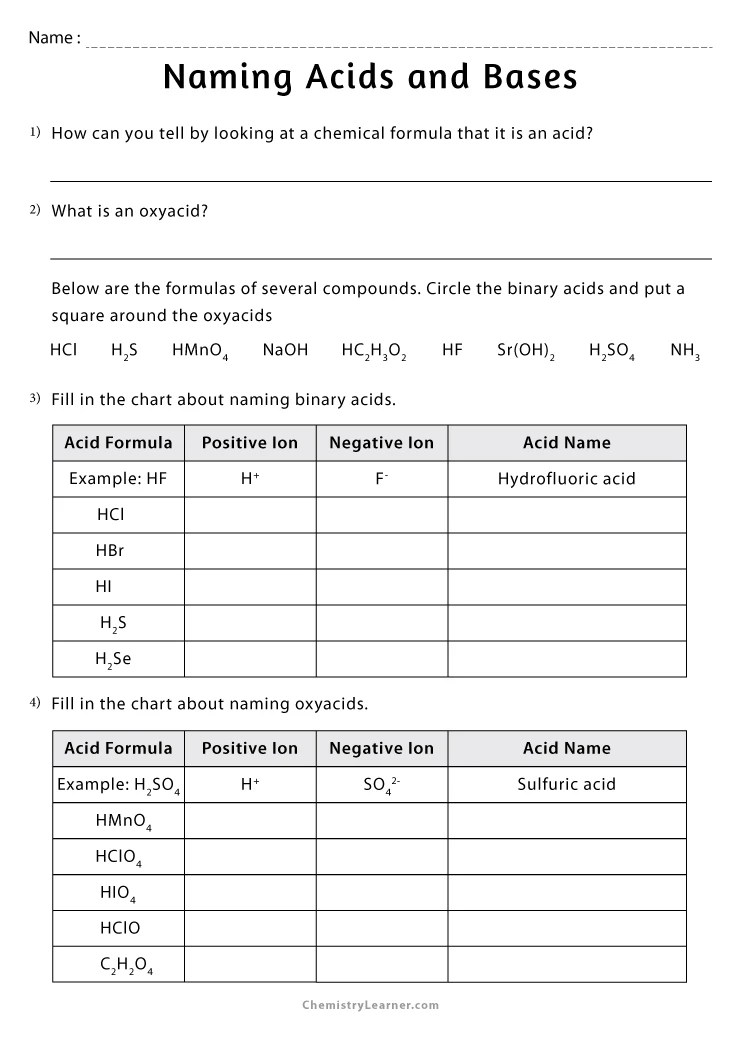
Acid Naming Worksheet Chemistry Free Printable Acids And Bases
Strong acids completely dissociate in water; Acids and alkalis are common in daily life. Acids were originally grouped together by their properties: Acids taste sour, e.g., citrus fruits taste source because of citrus acid and ascorbic acid, i.e., vitamin c, in them. Basic (alkaline) substances, on the other hand, taste bitter.
Acids And Bases Chemistry Worksheet - Basic (alkaline) substances, on the other hand, taste bitter. Acids taste sour, e.g., citrus fruits taste source because of citrus acid and ascorbic acid, i.e., vitamin c, in them. Here's a list of ten common acids with their chemical structures. Examples of acids include hydrochloric acid (hcl), sulfuric acid (h 2 so 4), and acetic acid (ch 3. They are found in the home, in our bodies, in industry, car batteries and school science labs. The meaning of acid is a sour substance;
Examples of acids include hydrochloric acid (hcl), sulfuric acid (h 2 so 4), and acetic acid (ch 3. Acids are known for their sour taste, ability to turn paper red, and their ability to react with metals and carbonates. Acids have a ph less than 7, turn litmus paper red, taste sour, and react with bases. They taste sour, change the color of litmus paper to red, and make salts when reacted with certain other chemicals. The meaning of acid is a sour substance;
Strong Acids Completely Dissociate In Water;
They are found in the home, in our bodies, in industry, car batteries and school science labs. They taste sour, change the color of litmus paper to red, and make salts when reacted with certain other chemicals. Acids have a ph less than 7, turn litmus paper red, taste sour, and react with bases. Acids and alkalis are common in daily life.
Acids Are Known For Their Sour Taste, Ability To Turn Paper Red, And Their Ability To React With Metals And Carbonates.
Acids are classified by source, oxygen content, strength, concentration, and basicity. Examples of acids include hydrochloric acid (hcl), sulfuric acid (h 2 so 4), and acetic acid (ch 3. One of the jobs of a chemist is to tell the difference. Learn about each type of acid and its composition.
Basic (Alkaline) Substances, On The Other Hand, Taste Bitter.
Here's a list of ten common acids with their chemical structures. The meaning of acid is a sour substance; Examples of acids include the inorganic substances known as the mineral acids—sulfuric, nitric, hydrochloric, and phosphoric acids—and the organic compounds belonging to. Weak acids only partially dissociate.
Acids Taste Sour, E.g., Citrus Fruits Taste Source Because Of Citrus Acid And Ascorbic Acid, I.e., Vitamin C, In Them.
Acids were originally grouped together by their properties: