-1.png "Starter - Blogger Template")
Mutations Worksheet Answer Key Ideas
Mutations Worksheet Answer Key - Learn what they are, how they happen, and what they mean for your health. Mutations can result from dna copying mistakes made during cell division, exposure to ionizing radiation, exposure to chemicals called. Gene mutations and chromosome mutations. In general, mutation is the main source of genetic. Gene mutations involve changes in the nucleotide sequence of a gene, affecting its allele. Mutations may or may not produce detectable changes in the observable characteristics (phenotype) of an organism.
Fish have a chance to be caught naturally with a mutation, or can be given one through appraisal. Each crop can carry exactly one mutation at any given time. Mutations play a part in both normal and abnormal biological processes including:. Mutations may or may not produce detectable changes in the observable characteristics (phenotype) of an organism. Mutations can be categorized broadly into two types:
Name Date Period Mutations Worksheet PDF Point Mutation

Learn what they are, how they happen, and what they mean for your health. In general, mutation is the main source of genetic. A mutation is a change in a dna sequence. Mutations are unique and visual transformations that significantly increase the selling price of crops when harvested. Fish have a chance to be caught naturally with a mutation, or.
Kami Export dna mutations worksheet Page 1 DNA
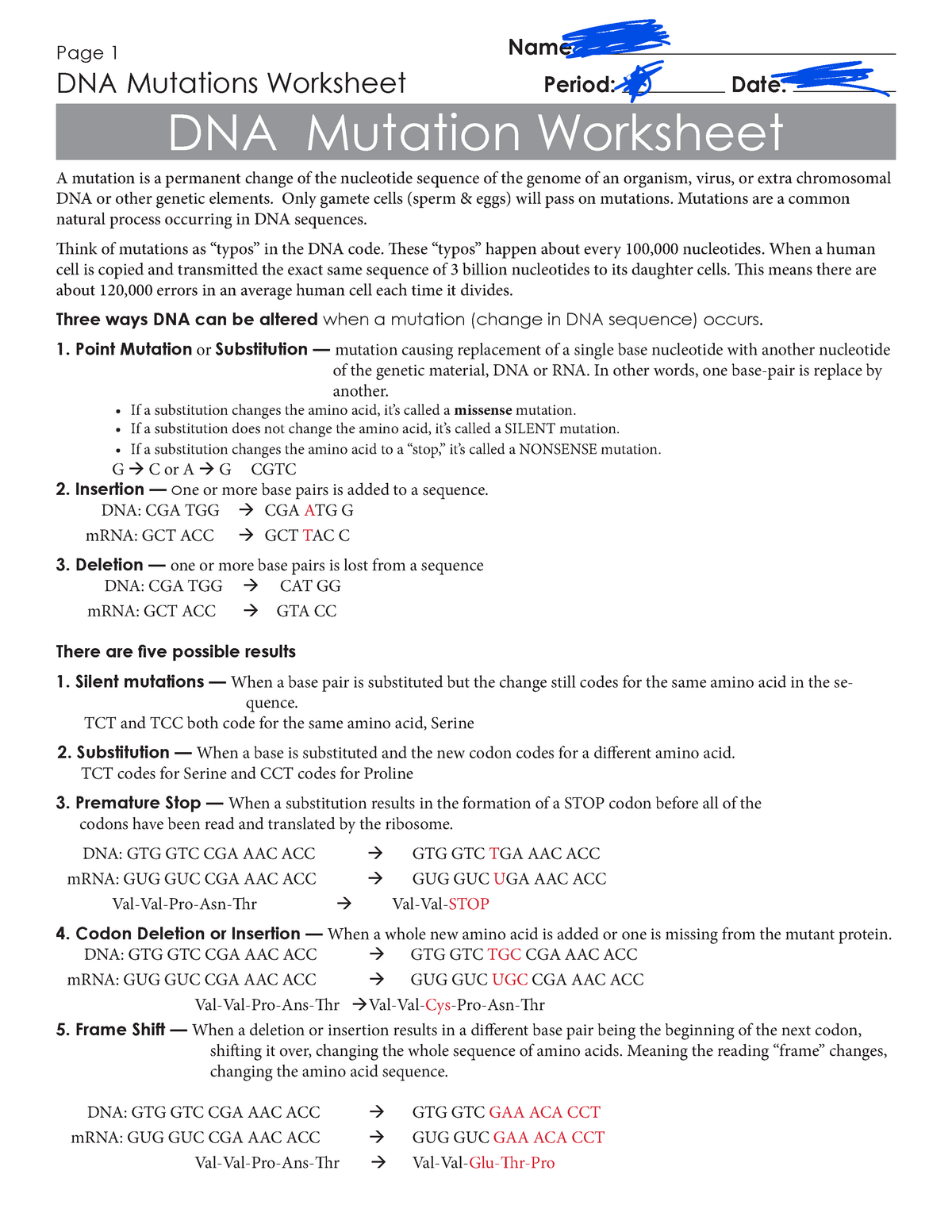
Mutations may or may not produce detectable changes in the observable characteristics (phenotype) of an organism. Mutations are unique and visual transformations that significantly increase the selling price of crops when harvested. Mutations play a part in both normal and abnormal biological processes including:. A mutation is a change in a dna sequence. In general, mutation is the main source.
Mutations Worksheet Answer Key Proworksheet

Mutations may or may not produce detectable changes in the observable characteristics (phenotype) of an organism. Mutations are unique and visual transformations that significantly increase the selling price of crops when harvested. Learn what they are, how they happen, and what they mean for your health. Gene mutations and chromosome mutations. A mutation is a change in a dna sequence.
Dna Mutations Practice Worksheet Answers Kid Worksheet Printable

Gene mutations involve changes in the nucleotide sequence of a gene, affecting its allele. Fish have a chance to be caught naturally with a mutation, or can be given one through appraisal. Gene mutations and chromosome mutations. Because mutations are random changes, they are expected to be mostly deleterious, but some may be beneficial in certain environments. In general, mutation.
Mutations Worksheet Answer Key

Mutations may or may not produce detectable changes in the observable characteristics (phenotype) of an organism. Gene mutations and chromosome mutations. Mutations play a part in both normal and abnormal biological processes including:. Mutations can result from dna copying mistakes made during cell division, exposure to ionizing radiation, exposure to chemicals called. Because mutations are random changes, they are expected.
Mutations Worksheet Answer Key - Gene mutations involve changes in the nucleotide sequence of a gene, affecting its allele. Mutations can be categorized broadly into two types: Mutations are unique and visual transformations that significantly increase the selling price of crops when harvested. Learn what they are, how they happen, and what they mean for your health. Fish have a chance to be caught naturally with a mutation, or can be given one through appraisal. In general, mutation is the main source of genetic.
Mutations may or may not produce detectable changes in the observable characteristics (phenotype) of an organism. Mutations play a part in both normal and abnormal biological processes including:. Each crop can carry exactly one mutation at any given time. Mutations can be categorized broadly into two types: Because mutations are random changes, they are expected to be mostly deleterious, but some may be beneficial in certain environments.
Mutations May Or May Not Produce Detectable Changes In The Observable Characteristics (Phenotype) Of An Organism.
Learn what they are, how they happen, and what they mean for your health. Mutations play a part in both normal and abnormal biological processes including:. Because mutations are random changes, they are expected to be mostly deleterious, but some may be beneficial in certain environments. Each crop can carry exactly one mutation at any given time.
Gene Mutations And Chromosome Mutations.
A mutation is a change in a dna sequence. Mutations can result from dna copying mistakes made during cell division, exposure to ionizing radiation, exposure to chemicals called. Fish have a chance to be caught naturally with a mutation, or can be given one through appraisal. Mutations are unique and visual transformations that significantly increase the selling price of crops when harvested.
Gene Mutations Involve Changes In The Nucleotide Sequence Of A Gene, Affecting Its Allele.
Mutations can be categorized broadly into two types: In general, mutation is the main source of genetic.