-1.png "Starter - Blogger Template")
Resistivity Of Metals Chart References
Resistivity Of Metals Chart - Electrical resistivity, represented by the greek letter ρ (rho), is a measure of how strongly a material opposes the flow of electric current. Electrical resistivity, also known as specific resistance, is the measure of a material’s ability to oppose the flow of electric current. Resistivity is a measure of how much a material resists the flow of electric current. The symbol of electrical resistivity is the greek letter rho (ρ). It is denoted by the greek letter ρ (rho). Resistivity of materials is the resistance to the flow of an electric current with some materials resisting the current flow more than others.
Electrical resistivity, represented by the greek letter ρ (rho), is a measure of how strongly a material opposes the flow of electric current. It is denoted by the greek letter ρ (rho). The resistivity of a material is a measure of how strongly a material opposes the flow of electrical current. The difference between copper, steel, and rubber is related to their microscopic structure and electron configuration, and is quantified by a property called resistivity. Resistivity of materials is the resistance to the flow of an electric current with some materials resisting the current flow more than others.
Resistivity Of Common Metals Electrical Resistivity And Conductivity

Electrical resistivity, also known as specific resistance, is the measure of a material’s ability to oppose the flow of electric current. The symbol of electrical resistivity is the greek letter rho (ρ). Resistivity is a measure of how much a material resists the flow of electric current. Electrical resistivity (also called volume resistivity or specific electrical resistance) is a fundamental.
Electric Conductivity, Resistance and Ohm’s Law ElectronicsLab
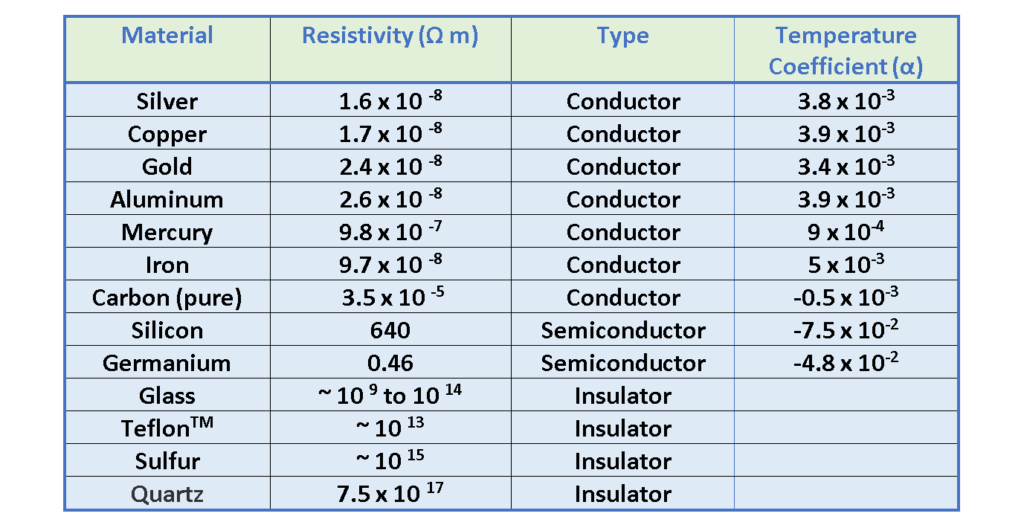
It is denoted by the greek letter ρ (rho). Electrical resistivity, represented by the greek letter ρ (rho), is a measure of how strongly a material opposes the flow of electric current. Electrical resistivity (ρ) is the fundamental property of a material that quantifies how strongly it opposes the flow of electric current. The symbol of electrical resistivity is the.
Comparison of electrical resistivity for copper alloy and stainless

The lower the resistivity, the more readily the material. Electrical resistivity, also known as specific resistance, is the measure of a material’s ability to oppose the flow of electric current. Electrical resistivity (ρ) is the fundamental property of a material that quantifies how strongly it opposes the flow of electric current. It is defined as the resistance of a conductor.
Table Of Resistivity Of Materials RUWKHS

Another intrinsic property of a material is the resistivity, or electrical resistivity. Resistivity of materials is the resistance to the flow of an electric current with some materials resisting the current flow more than others. The resistivity of a material is a measure of how strongly a material opposes the flow of electrical current. A characteristic property of each material,.
Conductivity Electrical resistivity and conductivity Michael

A characteristic property of each material, resistivity is useful in comparing various materials on the. Another intrinsic property of a material is the resistivity, or electrical resistivity. The resistivity of a material is a measure of how strongly a material opposes the flow of electrical current. It is denoted by the greek letter ρ (rho). Electrical resistivity (ρ) is the.
Resistivity Of Metals Chart - The lower the resistivity, the more readily the material. Resistivity is a measure of how much a material resists the flow of electric current. The difference between copper, steel, and rubber is related to their microscopic structure and electron configuration, and is quantified by a property called resistivity. It is defined as the resistance of a conductor having. Resistivity of materials is the resistance to the flow of an electric current with some materials resisting the current flow more than others. Electrical resistivity, also known as specific resistance, is the measure of a material’s ability to oppose the flow of electric current.
It is denoted by the greek letter ρ (rho). The resistivity of a material is a measure of how strongly a material opposes the flow of electrical current. Electrical resistivity (also called volume resistivity or specific electrical resistance) is a fundamental specific property of a material that measures its electrical resistance or how strongly it resists electric. The symbol of electrical resistivity is the greek letter rho (ρ). Resistivity of materials is the resistance to the flow of an electric current with some materials resisting the current flow more than others.
The Resistivity Of A Material Is A Measure Of How Strongly A Material Opposes The Flow Of Electrical Current.
Resistivity of materials is the resistance to the flow of an electric current with some materials resisting the current flow more than others. Electrical resistivity, represented by the greek letter ρ (rho), is a measure of how strongly a material opposes the flow of electric current. Resistivity is a measure of how much a material resists the flow of electric current. The lower the resistivity, the more readily the material.
Electrical Resistivity, Also Known As Specific Resistance, Is The Measure Of A Material’s Ability To Oppose The Flow Of Electric Current.
It is denoted by the greek letter ρ (rho). A characteristic property of each material, resistivity is useful in comparing various materials on the. Another intrinsic property of a material is the resistivity, or electrical resistivity. It is defined as the resistance of a conductor having.
The Symbol Of Electrical Resistivity Is The Greek Letter Rho (Ρ).
Electrical resistivity (ρ) is the fundamental property of a material that quantifies how strongly it opposes the flow of electric current. The difference between copper, steel, and rubber is related to their microscopic structure and electron configuration, and is quantified by a property called resistivity. Electrical resistivity (also called volume resistivity or specific electrical resistance) is a fundamental specific property of a material that measures its electrical resistance or how strongly it resists electric.