-1.png "Starter - Blogger Template")
What Color Is The Sun 2026
What Color Is The Sun - In comparison, the tungsten filament in an. Sunlight isn't a single color of light, but a combination of the emission spectra of all the elements in the star. It depends on your interpretation of color, the way colors work, the way our eyes see and, just as importantly, the air we see through. All of the wavelengths combine to form white light, which is the net color of the. So, why does it generally look yellow? Above the sun’s surface are its thin chromosphere and the huge corona (crown).
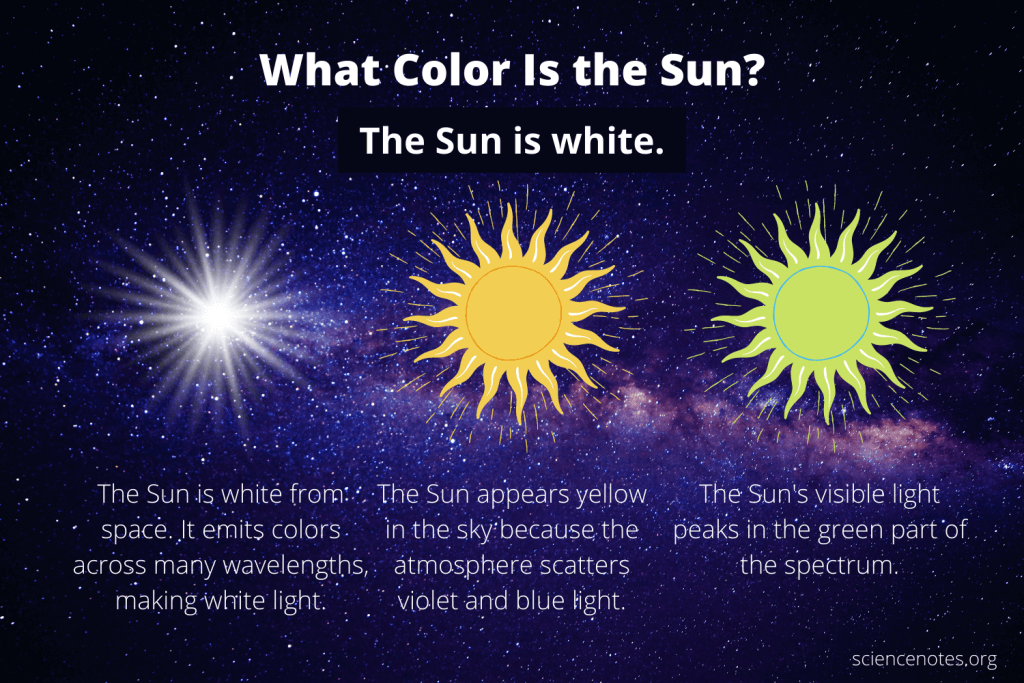
When these come together united in sunlight the sun appears white. In comparison, the tungsten filament in an. After the red giant phase, models suggest the sun will shed its outer layers and become a dense type of cooling star (a white dwarf), and no longer produce energy by fusion, but will still glow and give off. In its purest form, above the atmosphere and without interpretation, the sun shines in all visible wavelengths at once, and to human eyes, that color turns out to be simply white. So, because it emits wavelengths of all colours, the colour of the sun itself is white.
What color is the sun Space

The sun is white—kind of. So, why does it generally look yellow? It depends on your interpretation of color, the way colors work, the way our eyes see and, just as importantly, the air we see through. The internet source that suggested that the once yellow sun was now white, asked the reader to recall the crayon color chosen in.
Sun Color Solar System

When these come together united in sunlight the sun appears white. The sun would have to emit only green light for our eyes to perceive it as green. So, because it emits wavelengths of all colours, the colour of the sun itself is white. Sunlight isn't a single color of light, but a combination of the emission spectra of all.
Does The Sun Have Color
So, why does it generally look yellow? So, because it emits wavelengths of all colours, the colour of the sun itself is white. After the red giant phase, models suggest the sun will shed its outer layers and become a dense type of cooling star (a white dwarf), and no longer produce energy by fusion, but will still glow and.
If the Color of the Sun Is White, Then Why Does it Appear Yellow

It depends on your interpretation of color, the way colors work, the way our eyes see and, just as importantly, the air we see through. Above the sun’s surface are its thin chromosphere and the huge corona (crown). This is where we see features such as solar prominences, flares, and coronal mass ejections. Sunlight isn't a single color of light,.
What Is The Real Color Of The Sun

Above the sun’s surface are its thin chromosphere and the huge corona (crown). In its purest form, above the atmosphere and without interpretation, the sun shines in all visible wavelengths at once, and to human eyes, that color turns out to be simply white. When these come together united in sunlight the sun appears white. After the red giant phase,.
What Color Is The Sun - All of the wavelengths combine to form white light, which is the net color of the. When these come together united in sunlight the sun appears white. So, because it emits wavelengths of all colours, the colour of the sun itself is white. So, why does it generally look yellow? At least in space, that is, where light from the sun can be seen without interference. The internet source that suggested that the once yellow sun was now white, asked the reader to recall the crayon color chosen in childhood drawings to render the sun in.
At least in space, that is, where light from the sun can be seen without interference. This means the actual colour of the sun is white. The sun is white—kind of. After the red giant phase, models suggest the sun will shed its outer layers and become a dense type of cooling star (a white dwarf), and no longer produce energy by fusion, but will still glow and give off. When these come together united in sunlight the sun appears white.
The Internet Source That Suggested That The Once Yellow Sun Was Now White, Asked The Reader To Recall The Crayon Color Chosen In Childhood Drawings To Render The Sun In.
It depends on your interpretation of color, the way colors work, the way our eyes see and, just as importantly, the air we see through. This means the actual colour of the sun is white. The sun would have to emit only green light for our eyes to perceive it as green. So, because it emits wavelengths of all colours, the colour of the sun itself is white.
All Of The Wavelengths Combine To Form White Light, Which Is The Net Color Of The.
So, why does it generally look yellow? In its purest form, above the atmosphere and without interpretation, the sun shines in all visible wavelengths at once, and to human eyes, that color turns out to be simply white. Sunlight isn't a single color of light, but a combination of the emission spectra of all the elements in the star. After the red giant phase, models suggest the sun will shed its outer layers and become a dense type of cooling star (a white dwarf), and no longer produce energy by fusion, but will still glow and give off.
This Is Where We See Features Such As Solar Prominences, Flares, And Coronal Mass Ejections.
Above the sun’s surface are its thin chromosphere and the huge corona (crown). When these come together united in sunlight the sun appears white. In comparison, the tungsten filament in an. The sun is white—kind of.
At Least In Space, That Is, Where Light From The Sun Can Be Seen Without Interference.
The sun emits light across all the visible colors in the electromagnetic spectrum fairly evenly.